Thursday, June 30, 2011

Airshows Can Be A Dangerous Business


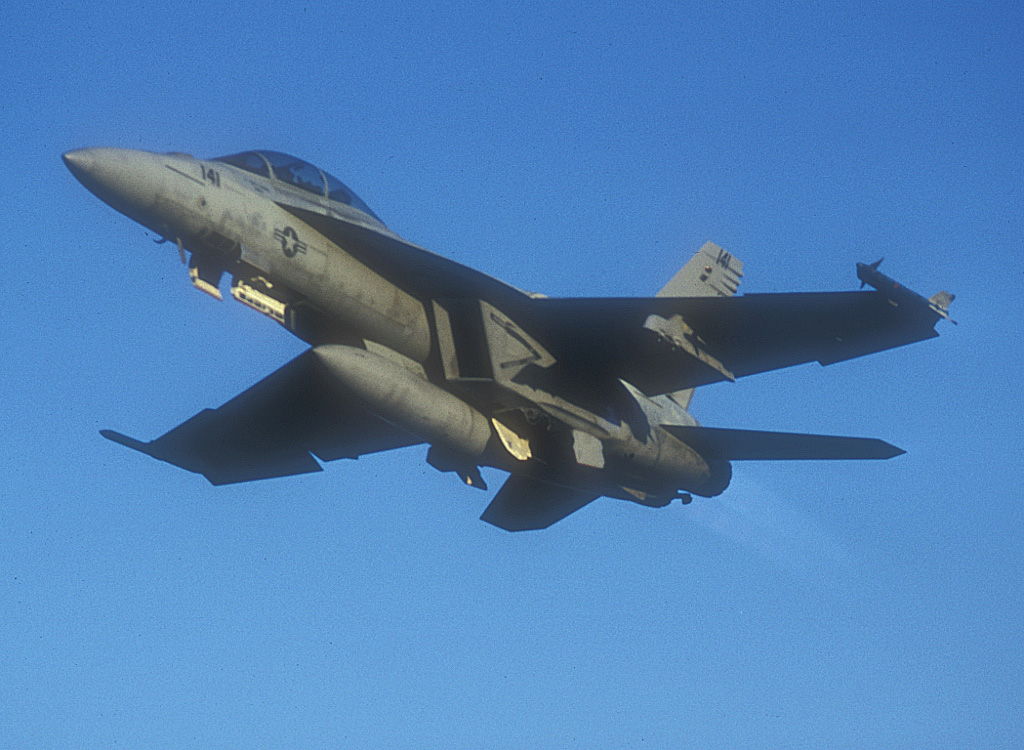
On April 6, Lt. Nathan Hollingsworth and Lt. Matthew Lowe, United States Navy, lost their lives when their F-18F crashed a mile from their home base at NAS Lemoore, CA.

Assigned to VFA-122, the Navy's west coast Super Hornet training squadron, these gentlemen were the demo team assigned to fly the F-18F at airshow demonstrations this year. They were practicing their demonstration when the plane went down.

They were flying F-18F BuNo 165877, assigned to VFA-122, coded NJ-122.

Godspeed gentlemen ...

Flying airshows can be dangerous. Even flying practice for airshows can be dangerous.

These photos are of 165877, seen during a 2006 training detachment to NAS Ft. Worth. Coded NJ-141 at the time, it was one of several VFA-122 aircraft flown by fledgling Hornet pilots against home based VFA-201 in air combat training exercises. Photos by yours truly.

Saturday, June 25, 2011

My Enemy, My Friend


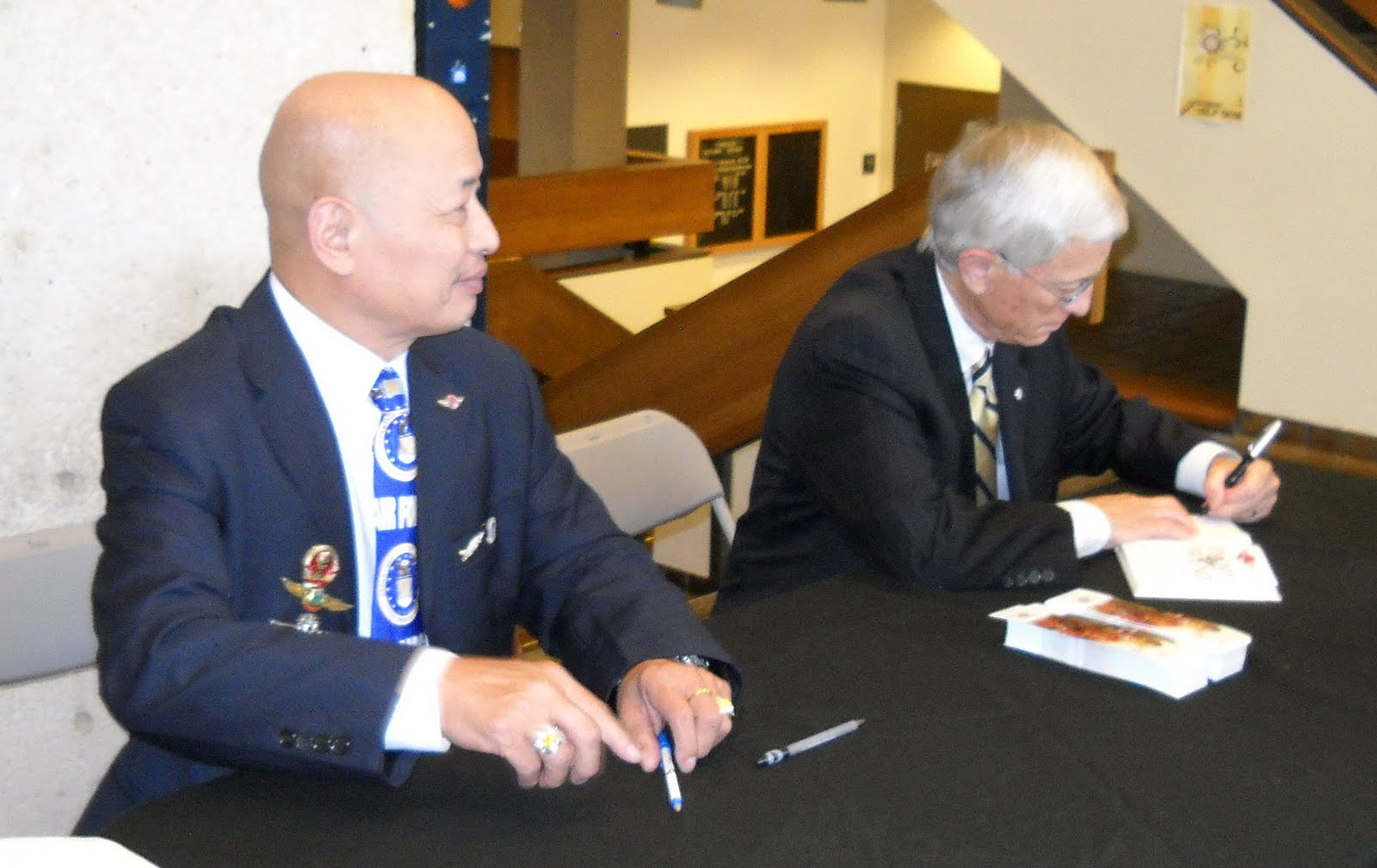
I had an interesting weekend afternoon. The University of Texas at Dallas hosted a lecture. The focus was a series of events over North Vietnam in 1972 that linked 3 men and an airplane into a circle that closed in 2009.

Dan Cherry, assigned to the 13TFS/432TRW, flying out of Udorn AB, Thailand, shot down a NVAF MiG-21 on April 16, 1972. The engagement was southwest of Hanoi, and has been documented in the History Channel's "Dogfights" series (episode "Hell Over Hanoi"). Cherry was flying F-4D 66-7550 when he scored the kill. The enemy pilot was able to eject from his burning aircraft.

Dan Cherry found that same F-4D in 2004, sitting in a state of disrepair outside a VFW post in Ohio. Cherry, a retired BGeneral and MiG Killer, was able to convince the USAF to let him move the aircraft to his hometown of Bowling Green, KY, where it was painted in the scheme and markings it carried at the time of the kill. It has become the centerpiece of an aviation historical park.

Along the way, Cherry had wondered what ever happened to the pilot of that MiG, the one he saw hanging in his parachute. In a roundabout series of events, Cherry ended up in Vietnam, participating in a TV show where he was introduced to that same pilot, Nguyen Hong My. Mr. Nguyen had survived the war, was a successful insurance salesman in Hanoi, and was in very good shape.

During their time together, Cherry noticed that Nguyen wore a decoration that indicated he had shot down an enemy aircraft. Answering the inevitable question, he said that he had shot down an American RF-4C recon aircraft. He asked Cherry for a favor. He had always wondered what happened to the crew of that RF-4, would he mind seeing if they were still alive, for Nguyen would like to meet them.

After returning to the US, Cherry was able to locate the RF-4's backseater, John Stiles. The pilot had passed away a few years ago. Nguyen traveled to the US and met Cherry and Stiles in Washington. The circle closed when Nguyen traveled to Bowling Green to attend the dedication of 66-7550 in its new place of honor. In what may be the only time this has ever happened, a pilot (Nguyen) sat in the cockpit of the very plane that had shot him down 37 years before.

Cherry, Stiles, and Nguyen spent two hours telling us their story. Two very emotional hours. The coincidences were amazing. Stiles account of his shootdown was harrowing - it is frankly incredible that he and his front seater survived. Another piece of the history puzzle, Bob Noble, was in attendance. Bob, in an Air America Huey, rescued Stiles from the jungle 8 hours after his plane went down.

The auditorium was packed, extra seats had to be brought in, and there were still people standing along the walls. Cherry asked for all Vets in attendance to stand. A third of the people there stood up, most appearing to be of Vietnam service age. The fellow sitting next to me, wearing a River Rats polo shirt, and I visited a bit. He was a RF-4C pilot, in the same unit as Chiles - though not at the same time. He had been cornered by two MiGs during one of his missions, but they inexplicably did not shoot at him. During Chiles' account, this fellow was gripping the arms of his chair, and you could see tears appearing.

The auditorium was deathly quiet as Cherry recounted touring the Hanoi Hilton during his Vietnam visit, and showed pictures of it. It was visibly difficult for some of the people there to watch that.

All in all, the presentation was very well received, with several standing ovations.

The men were going to do a Q&A afterwards, but some a*hole stood up and rambled on in an incoherrent political statement about the war. They stopped it at that point. I was upset - I had several brilliant (I thought) questions thought up for them.

Cherry wrote about all of this in a book, "My Enemy, My Friend". The proceeds are helping fund the memorial in Bowling Green.

Thank you, gentlemen, for sharing this story with us.


www.aviationheritagepark.com

Wednesday, June 8, 2011

Speed Of Sound Captures


Here are a few photos of a beautiful visual effect that occurs when an aircraft approaches the speed of sound. For just an instant, a cloud forms around the aircraft. Known as a Prandtl-Glauert condensation cloud, this is typically seen when a high speed aircraft approaches the speed of sound low to the ground, in high humidity conditions. The cloud forms and dissipates in the blink of an eye.

Aviation photographers who know about this try hard to capture it. It makes a wonderful, impressive photo.


All Photos Credit US Navy.

Friday, May 20, 2011

Uncle Jack and Thunderbird


I ran across this video over at Warbird Information Exchange. It is kind of long (16 minutes), but is well worth the view. It details TV actor Gary Sinese's efforts to get his Uncle Jack a ride in a B-17. Jack Sinese was a B-17 navigator in WWII. Gary's friendship with the folks at Lone Star Flight Museum worked out, and surprise - Jack finds himself on a ride in Thunderbird.

This is pretty neat ...


www.sleepingdogtv.com/reel/Uncle-Jack.aspx


p.s. - Cousin Gumby flew the Fort during this flight, his is the voice you hear asking Jack if he wants to go flying.

Thursday, May 19, 2011

Heritage Phantoms


The Barksdale AFB airshow a couple of weekends ago featured two QF-4E Phantoms. They were from 82ATS, Det.1, based at Holloman AFB, NM. Both aircraft are painted in 'Heritage' paint schemes, a program the Air Force undertook a few years ago to paint up select QF-4s in paint schemes representing F-4s in USAF service over the years. 72-1140 is painted in Vietnam style camoflage, while 72-1485 carries the SEA wraparound scheme (no white belly).

72-1140 performed a spirited demo on each day of the show, flown by Bluto. Afterwards, it joined an A-10C from D-M AFB and P-51D Galveston Gal for a Heritage Flight demonstration. Seeing a Phantom fly these days is a very rare treat. To see one flown in a demo just doesn't happen very often.

The only remaining Phantoms in US service have been converted into target drones. They are used to test weapons systems and provide aircrew training. Based at Holloman AFB and Tyndall AFB, they are routinely flown several times with a pilot before being sent off on an unmanned mission that ends with the aircraft being shot down.

Spending the weekend in close proximity with the pilots and ground crew members for these jets was a treat. The loving care with which they treated the old girls was impressive - you would have thought that they were brand new aircraft, not ones that had been built 39 years ago.

The number of QF-4s left will ensure the aircraft is flying for a few more years. Current 'expentiture' estimates show the last shootdown happening sometime between 2014 and 2017. The last F-4 drone conversion contract was just signed, meaning there will be no more drone conversions after this small group passes through. QF-16 Lawn Darts will take their place on the shootdown line.

Wednesday, May 4, 2011

New Stealth Hawk Used in Pakistan?


Photos released by Reuters show the wreckage of the 'Blackhawk' helicopter that was lost during the Bin Laden raid. From what I've heard, it supposedly had a mechanical failure and was destroyed on site. The helo was the one that landed inside the compound. What was left of the main body of the helo was burnt to an unrecognizable crisp ... BUT the tail rotor fell off or broke off sometime during the raid, ending up on the other side of a wall.

Photos of the tail rotor give some pretty definite hints that this was a special, previously unknown (at least to me) version of the Blackhawk family. The tail rotor appears to be optomized for stealth, with deflectors and fairings that appear to be designed to defeat radar.

This photo shows the top of the tail rotor assembly. It is resting on the very back of the tail, with the fuselage (or where the fuselage would normally be, pointing up to the sky.

Very interesting ... Can't wait to see one of these intact!


Photo credit Reuters

Update - Pakistan officials will release the tail rotor back to US possession, as a result of a visit from US Senator John Kerry. While on the surface, this seems to be good news, it doesn't really matter. Pakistan gave full access to the piece to Chinese military officials and scientists, who had all the time they needed to take it apart, study it, and take samples of the materials.

Pakistan - with allies like this, who needs enemies?

Sunday, May 1, 2011

Galveston Gal - Up And At 'Em


Lone Star Flight Museum's long awaited return to the ranks of Mustang ownership has been completed with the purchase and restoration of 'Galveston Gal'.

After a lengthy restoration and repaint, the aircraft made its airshow debut at NAS Corpus Christi, followed by a weekend at NAS Ft. Worth participating in the USAF Heritage Flight with an A-10C Thunderbolt II.


N4151D is actually a TF-51D, a true dual control Mustang, one of 12 built to this standard. Originally built as a normal P-51D, it was converted to dual controls while in service with the El Salvador Air Force. To my knowledge, it is the only survivor of these conversions. Once owned by Lone Star, they purchased the aircraft back from owner William Hane in 2009, and had it rebuilt by Ezell Aviation in Breckenridge, TX.

'Galveston Gal' is a faithful recreation of the P-51D that was flown by Lt. Ray Lancaster in the 370th Fighter Squadron, 359th Fighter Group. Now 90 years old, Lt. Lancaster was present in Galveston at LSFM when Tom Gregory brought the aircraft in on its delivery flight from Breckenridge.


The original 'Galveston Gal' was not named for a particular lady, but for the song made famous by Gene Autry.

These photos were shot in Ft. Worth during the airshow. The Heritage Flight was flown by Cousin Gumby in the Mustang, with General Tommy in his backseat, while Rifle was driving the Hawg.


Wednesday, April 27, 2011

Navy Colors VII - Centennial Celebration in person

EA-6B 160609, VAQ-129, based at NAS Whidbey Island. Paint sheme represents the colors carried by carrier based aircraft during the Battle of Midway.


F-18C 164673, VFC-12, based at NAS Oceana.

T-6B 166064, TAW-5, based at NAS Whiting Field.

T-39N 165532, VT-86, based at NAS Pensacola.

T-34C 164172, TAW-5, based at NAS Whiting Field

T-34C 164169, TAW-5, based at NAS Whiting Field. Paint scheme represents US Coast Guard aicraft in the 1930s.

T-45C 163656, TW-2, based at NAS Kingsville.


F-18A+ 162866, VFA-204, based at NAS New Orleans. Paint scheme representes US Navy Reserve aircraft of the early 1950s.

I had the pleasure of photographing several of the specially painted Centennial of Naval Aviation aircraft at a recent airshow at NAS Ft. Worth. Very cool ...

Although very glad to get these, I was disappointed by the turnout of CONA aurcraft. Of the 24 or so specially painted birds out there, only 8 showed up. This one of the Navy sanctioned official Centennial events for the year - I would have thought we'd have gotten more of the aircraft in attendance.

Wednesday, April 20, 2011

Outlaw's Last Flight


Good Friend Outlaw13 recently took his last flight in the US Army. Outlaw has been in the Army for 23 years, flying Hueys and Apaches. He has spent about 6 of those years deployed overseas. 4 deployments of a year or longer to combat zones (3 times in Iraq, one in an 'undeclared war') and a year spent in Korea on the front lines of the Cold War.


His last flight was at home, in the bright sun on a beautiful Central Texas afternoon. He and his gunner gave me my own private airshow on a small hilltop just south of the airfield complex at Ft. Hood. This was only the second time I had seen him fly - the first was watching him blow over a string of porta-potties while landing a Huey (completely accidental, I can almost assure you).


As I stood on the hilltop with one of his fellow pilots, I was awed by the aircraft and what he did with it. I have seen hundreds of Outlaw's pictures of Apaches in action, but until you see one up (very) close flying around pointing its gun at you, you just do not have an appreciation for what it brings to the table in conflict. Jim, the pilot who was on the groud with me, remarked that it was the first time he had seen the Apache from that perspective, he now saw why the good guys on the ground were so happy when the Apaches showed up to support them, and why the bad guys crapped themselves and ran away.


Upon landing, the base fire trucks gave him the traditional Crossed Sabers tribute with their water cannons as he taxied back in. They then hosed him down as he walked back to the hangar, where a group of his peers then doused him with warm champagne and a Corona. Traditional fanfare for the last flight of a long time aviator in military service.


I have been priviledged to know Outlaw since before he put on the green uniform. I am proud to call him friend. I am convinced that our country has been safer with him in the cockpit than it would have been without him. Likewise, I am convinced his fellow soldiers have been safer with him looking after them.

Friday, April 8, 2011

A Hero Passes ...


Franklin E. Pauli passed away on March 31, at the age of 83. Frank served in the US Navy in WWII, and with the Army in Korea and Vietnam. He retired in 1970 after 26 years of service. His awards were 3 Bronze Stars and 12 Air Medals accumulated during his tours in Vietnam. He served as a flight acceptance pilot assigned to Bell Helicopter in Hurst, TX.

After retirement from the service, Frank joined American Airlines, where he spent 25 years as a flight instructor. Chances are very good he crossed paths with my father while there!

God speed, Frank ...

Monday, March 14, 2011

Tsunami's Affect on JASDF


The devastating earthquake and resulting tsunami have crippled Japan. There are no words to cover how much of a disaster this really is. We are learning more by the hour.

At least one Japanese military base was hit hard. Matsushima AB was home to F-2 fighters (Japan's indigenous version of the F-16), and T-4 trainers. There are reports that 18 of the advanced fighters were tossed around by the floodwaters. With their delicate electronic systems being bounced around, and the salt water immersion, it is doubtful that they will be repairable.

The Blue Impulse Aerobatic Team was not at home during the disaster. Two of their spare T-4 aircraft were on the base, and are presumed to have flooded out. At least one UH-60 rescue helicopter was seen in a damaged condition, as were several U-125 maritime surveillance aircraft.

A number of historic, preserved aircraft were flooded. Aerial photos show them covered with debris.

The human cost to this disaster is hard to comprehend. Like the Haiti earthquake, or the Indonesian tsunami, natural disasters like this are on a scale that is not comprehendable, unless you are directly involved. However, in the long term, it appears that Japan's Defense Forces have suffered a serious blow.

Photo Credit AP.